

Quick Answer: A used transmission is usually the cheapest upfront, roughly $1,500 to $3,500 installed, while a rebuilt one typically runs $2,000 to $4,500 but often comes with a stronger warranty. Over time, rebuilt tends to win if you’ll keep the car for years or a failure would mean paying install labor again. Used tends to win on lower-value cars or shorter timelines.
Most transmission cost guides compare new against used. If you’re staring at a repair quote, the more useful question is the one in between: is a used unit really cheaper than a rebuilt one once you count what happens if something goes wrong? Here are the real price ranges, the hidden cost that catches people out, and a simple way to decide.
How Much Does Each Option Cost Installed?

Installed prices vary a lot by vehicle, drivetrain, and local labor rates. Here are typical planning ranges for 2026:
| Option | Typical Installed Cost | Typical Warranty | Biggest Risk |
| Used (from a donor vehicle) | $1,500 – $3,500 | Varies widely; often shorter and sometimes parts only | Unknown history; you may pay install labor twice if it fails |
| Rebuilt (local shop) | $2,000 – $4,500 | Often 12 to 24 months | Quality depends heavily on the shop |
| Remanufactured (factory-built) | $2,500 – $6,000 | Often up to 3 years | Highest upfront cost |
Labor is a big piece of every option. Removing and installing a transmission commonly takes several hours of shop time, so labor alone often runs somewhere between $700 and $1,600 or more, and more on trucks and all-wheel-drive layouts. That matters for the next section.
What Is the Hidden Cost of a Used Transmission?
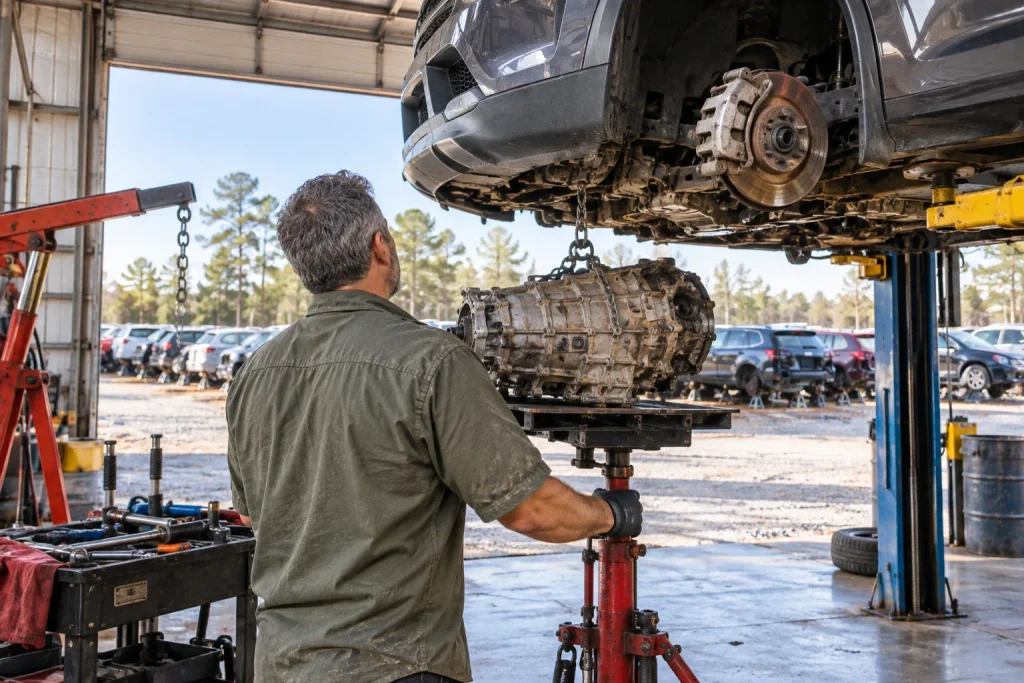
The unit is cheap. The labor is not, and you pay it every time the transmission comes out. If a used unit fails after its warranty ends, or its warranty covers only the part, you can end up paying for installation again on top of a replacement.
Here is an illustrative example with simple numbers, not statistics. Say install labor is $1,000:
- Used: $1,800 unit plus $1,000 labor is $2,800 upfront. If it fails outside its warranty, you may owe another $1,000 in labor plus another unit.
- Rebuilt: $3,200 installed with a 24-month warranty covering parts and labor. A failure in that window is the shop’s problem.
The gap between them is $400. That $400 is effectively the price of the warranty. If a second round of labor is a risk you can’t afford, it’s cheap insurance. If the car is worth little or you may sell soon, it may not be.
When Does a Used Transmission Make More Sense?
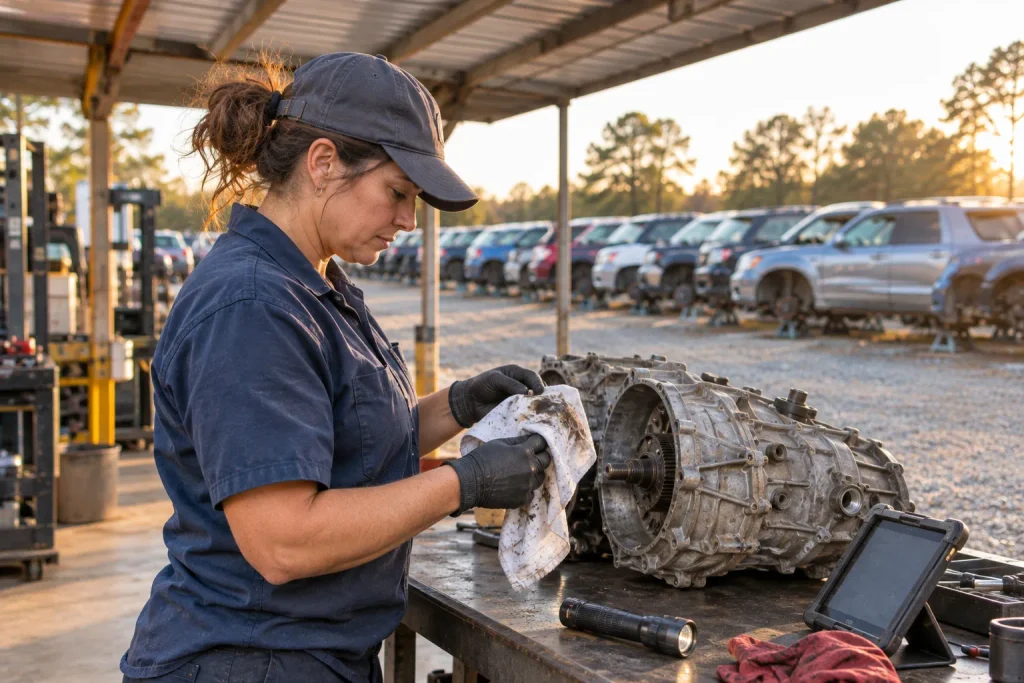
- The car is low in value and a rebuild would eat most of what it’s worth.
- You don’t plan to keep it long, so a longer warranty has less time to pay off.
- The unit is documented. Donor mileage, test results, and a clear warranty narrow the gap with a rebuilt unit considerably.
When Does a Rebuilt or Remanufactured Transmission Win?
- You plan to keep the car three or more years, so a longer warranty actually gets used.
- Labor is expensive, as it often is on trucks and all-wheel-drive vehicles, which makes a second install costly.
- You want labor covered. Many rebuild and remanufactured warranties include it, but confirm that in writing.
What Should You Ask Before You Buy Either One?
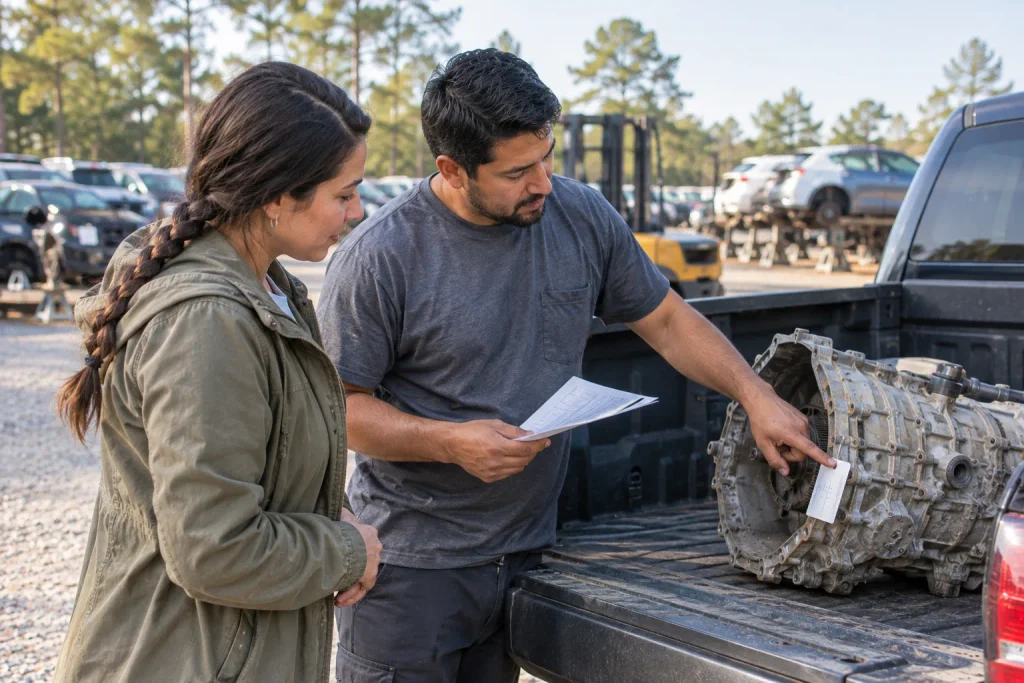
1. Does the warranty cover labor as well as the part, and for how long?
2. What was the donor vehicle’s mileage, and was the unit tested?
3. Is there a core charge, and what is the return process if it doesn’t fit?
4. Is the warranty in writing? The FTC notes there is no standard warranty on repairs, so understand what’s covered and get it in writing. See its Auto Repair Basics guide.
5. Did the seller do the checks in our 10-point used engine checklist? Many of them apply to transmissions too.
Frequently Asked Questions
Is a rebuilt transmission the same as a remanufactured one?
No. A rebuilt unit is typically repaired by a local shop to fix the specific failure, while a remanufactured unit is rebuilt in a factory setting to a standard specification and tested before it ships. Remanufactured units commonly carry longer warranties.
Does a used transmission warranty cover labor?
It depends on the seller. Some used-part warranties cover only the part, which means a failure can cost you install labor again. Ask whether labor is covered and get the terms in writing.
How long does a used transmission last?
It depends on the donor vehicle’s mileage, how it was maintained, and whether the unit was tested. Ask for the donor mileage and any test results rather than relying on a general estimate.
Is it worth replacing the transmission at all?
Compare the total installed cost to the car’s value. If the repair approaches or exceeds what the car is worth, selling the car may make more sense than repairing it.
The Bottom Line
Used is cheaper upfront; rebuilt is often cheaper if something goes wrong. The right pick depends on what the car is worth, how long you’ll keep it, and whether the warranty covers labor. Run the numbers on your own quote before you decide, and don’t pay for a unit with no history and no written terms.
Want to see tested transmissions with documented history? Search our inventory and review our parts warranty before you buy.