
Quick Answer: Before buying a used engine, confirm the engine code matches your vehicle, check the mileage and pull history, inspect for leaks and damage, check the oil for sludge or coolant contamination, and get proof of a compression test and a running test. If a seller already tested the engine, ask to see the results instead of guessing at a yard.
Most used-engine checklists assume you’re standing in a junkyard with a flashlight, walking a row of pulled motors and hoping one of them is good. That’s not how it has to work. If a seller pulls, tests, and documents the engine before it’s ever listed, your job changes from inspecting a mystery part to verifying someone else’s work. Here are the 10 things worth confirming either way, whether you’re standing in a yard or reading a listing online.
Why a Pre-Tested Engine Changes What You Need to Check
A used engine that’s already been pulled, cleaned, and tested should come with answers, not just a price tag. If a seller can’t produce test results or basic history, that’s worth treating as a red flag on its own.
Documentation and Compatibility Checks
1. Confirm the Exact Engine Code Matches Your Vehicle
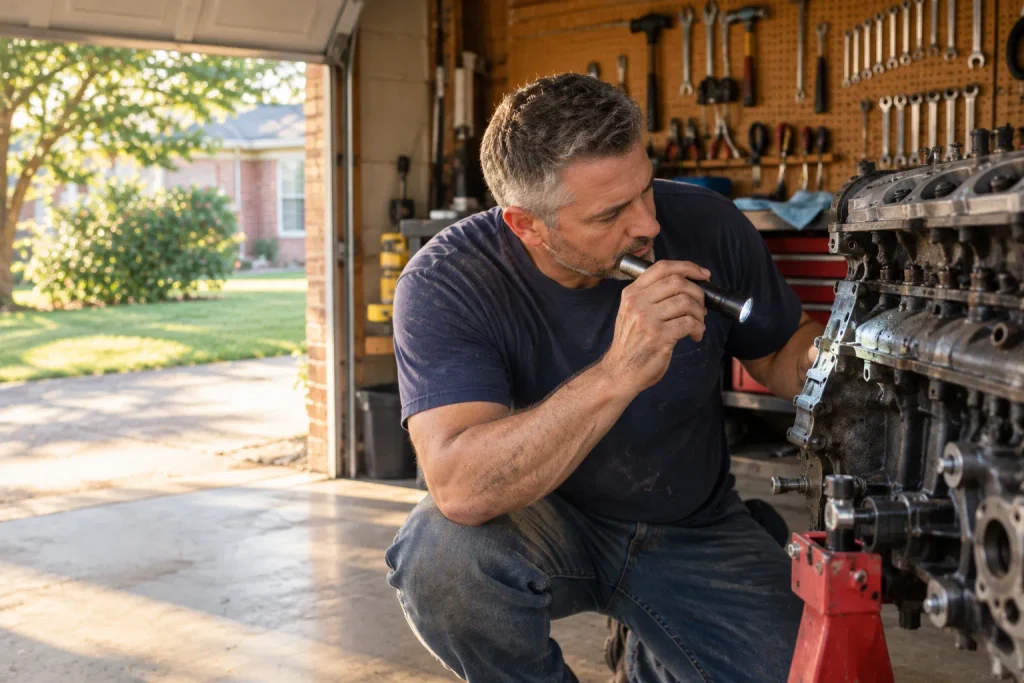
A model year and displacement match isn’t enough. The same Camry model year can carry different engine codes depending on trim, so confirm the exact code stamped on the block against your vehicle’s own VECI emissions label, usually found under the hood. Source: EPA
2. Verify Mileage and Pull History
Ask how many miles were on the donor vehicle and why it was retired. An engine pulled from a low-mileage accident car is a different bet than one pulled from a high-mileage vehicle that was already failing.
3. Match the VIN to the Donor Vehicle
A reputable seller can tell you the donor vehicle’s VIN or at least confirm the engine’s origin. This matters most for engines with embedded electronics tied to the original vehicle’s computer.
Visual and External Condition Checks
4. Inspect for Cracks, Corrosion, and Damage
Look over the block, heads, and mounting points for cracks, heavy corrosion, or impact damage. A little surface rust from storage is normal; pitting or cracking around bolt holes is not.
5. Check for Oil and Coolant Leaks
Dried oil or coolant residue around gaskets and seals can point to a pre-existing leak that will resurface once the engine is running again. Ask specifically whether the seller pressure-tested the cooling system.
6. Confirm Wiring Harness and Sensors Are Intact
Missing or cut sensors, connectors, or harness sections mean extra cost and troubleshooting after installation. Ask for a parts list showing exactly what’s included with the engine.
Fluid and Internal Health Checks
7. Check Oil Condition for Sludge or Metal
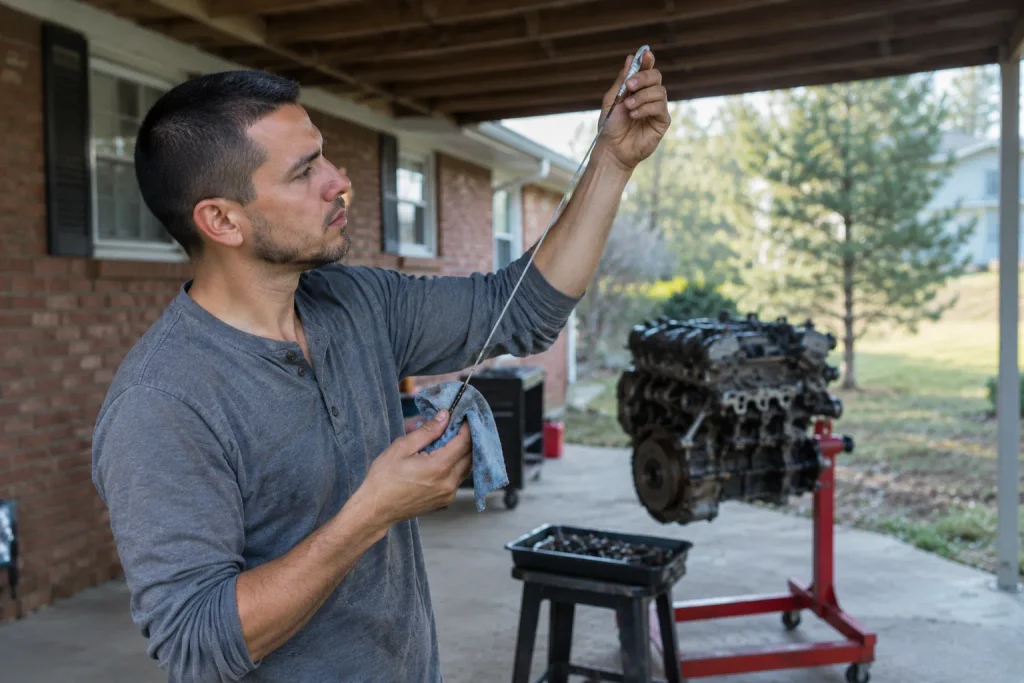
Clean, amber oil is a good sign. Black sludge under the oil cap or metal flecks in the oil point to internal wear that a compression test alone won’t always catch.
8. Look for Coolant Contamination in the Oil
A milky or foamy film on the dipstick usually means coolant has mixed with the oil, a common sign of a blown head gasket. This is one of the fastest disqualifiers on the list.
Performance Verification
9. Ask for Compression or Leak-Down Test Results
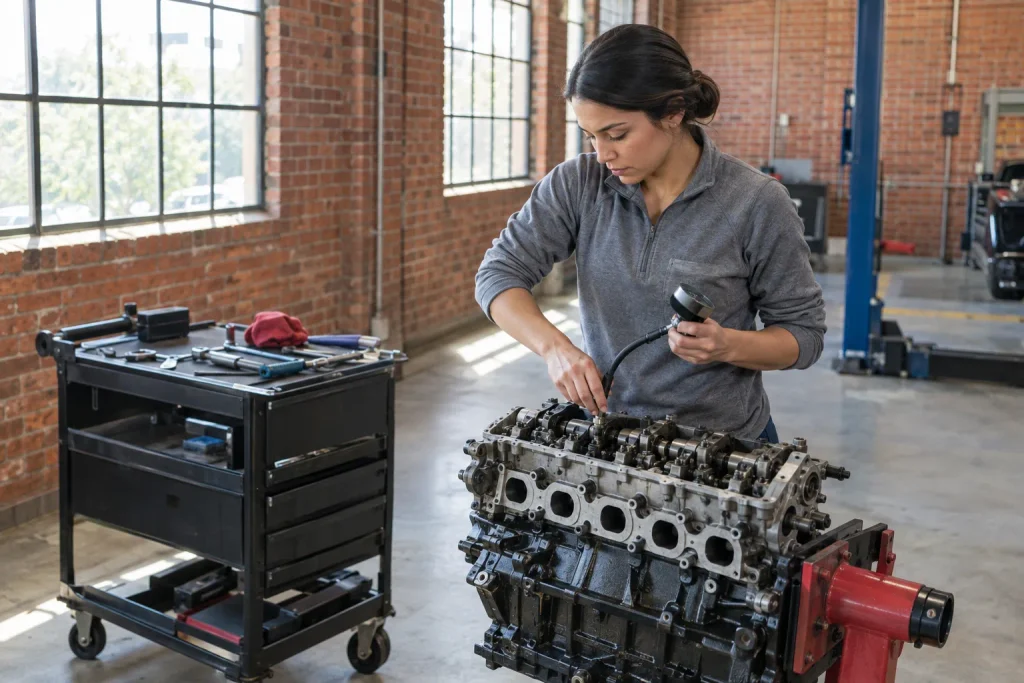
A compression test measures how well each cylinder holds pressure, and even readings across cylinders are the goal. Uneven results point to worn rings or valve problems that won’t show up just by looking at the engine.
10. Get Proof of a Running Test
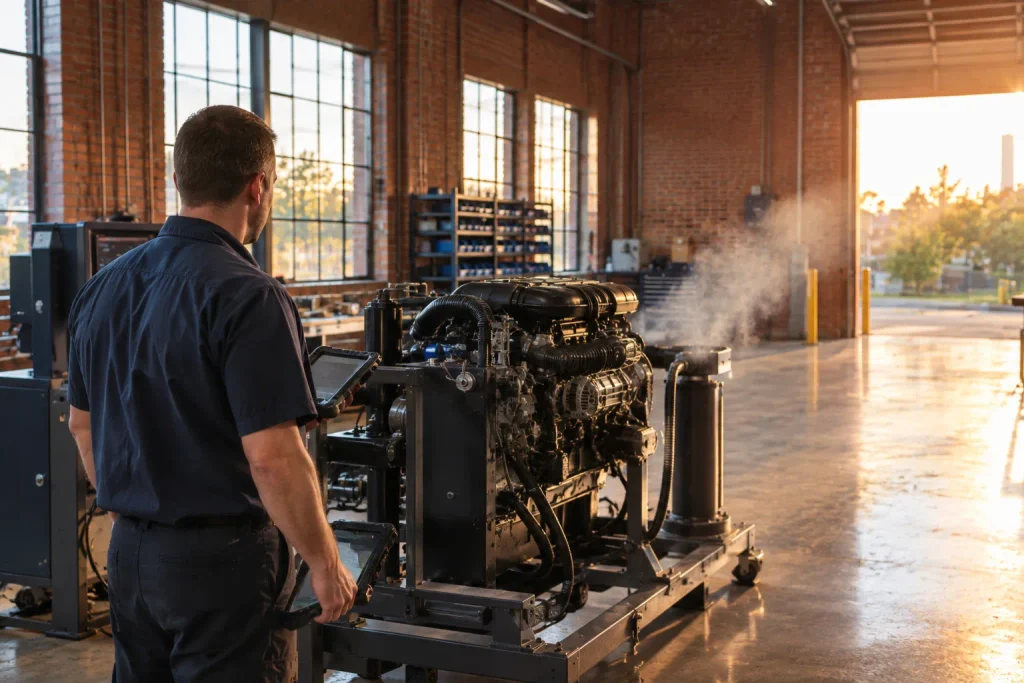
Video of the engine running, or documentation of a bench or in-vehicle run test, tells you far more than a static photo. If a seller can’t show the engine running before sale, ask why.
What to Ask a Seller Before You Buy
A few direct questions will tell you more than any visual inspection:
- Can I see the compression test results for each cylinder?
- What was the donor vehicle’s mileage, and why was the engine pulled?
- Does the engine come with a warranty, and what does it cover?
- What accessories and sensors are included versus sold separately?
- Was the engine run-tested after being pulled, and is there proof?
Here’s how a self-pull yard engine compares to one that’s already been tested:
| Check | Self-Pull Yard Engine | Pre-Tested Engine |
| Compression results | Rarely available | Usually documented |
| Mileage and history | Often unknown | Typically provided |
| Running test | You test it yourself, if allowed | Verified before listing |
| Warranty | Rare | Common with reputable sellers |
Frequently Asked Questions
Can a used engine pass a visual inspection but still be bad?
Yes. Sludge, coolant contamination, and low compression often aren’t visible from a quick look. A compression test and oil check catch problems a walk-around inspection misses.
How much should a compression test cost if I have to pay for one?
Independent shops typically charge a modest flat fee for a full compression test, though pricing varies by shop and engine size. Ask a seller first whether test results are already available.
Is a used engine without a warranty worth buying?
It can be, if the price reflects that risk and the engine passed a documented compression and visual inspection. A warranty just shifts more of that risk back to the seller.
What’s the single most important check on this list?
Confirming the exact engine code match. An engine that’s mechanically perfect but wrong for your vehicle’s wiring and computer setup isn’t a good deal at any price.
The Bottom Line
A used engine is only as good as the information behind it. Match the engine code, check the history, look for contamination, and ask for real test results before you buy. If a seller has already done the pulling and testing, use that to your advantage instead of starting from scratch with a flashlight.
Want to see what a fully tested engine’s documentation actually looks like? Search our verified inventory or ask our team what’s included before you buy.