
Quick Answer: A salvage title means the donor vehicle was declared a total loss, while a clean title means it carries no such brand. For a used part, the title belongs to the donor car, not the part. A salvage donor doesn’t make a part bad, and a clean donor doesn’t make one good. Test results, mileage, damage location, and warranty matter more.
If you’ve read about salvage and clean titles before, it was probably written for someone buying a whole car. That advice doesn’t translate neatly to parts. When you’re buying a used alternator, door, or engine, the real question is whether the title on the car it came from affects the part in your hands. Here’s what the terms mean, and what actually matters instead.
What Is the Difference Between a Salvage Title and a Clean Title?

A salvage title is issued when a vehicle is damaged badly enough that the repair cost is significant compared with its value, commonly after an insurer declares it a total loss. A rebuilt title means a salvage vehicle was later repaired and passed inspection. The Georgia Department of Revenue explains these brands on its check the VIN before you buy page. Thresholds and brand names vary by state, so the same car can be branded differently depending on where it was titled.
A clean title simply means no such brand has been recorded. It says nothing about how a single component has aged.
| Title Type | What It Means | What It Means for a Used Part |
| Clean | No total-loss or similar brand on the donor vehicle’s title | A good sign about the car’s history, but not a guarantee the part itself is healthy |
| Salvage | Declared a total loss, often after a collision, theft, or other damage | Where many used parts come from; judge each part on its own condition and testing |
| Rebuilt | Previously salvage, then repaired and inspected for road use | Ask what was repaired and whether your part was near the damage |
| Flood or water brand | Branded for water damage in states that use that brand | Be cautious with electronics, modules, and wiring from the donor |
| Junk or parts-only | Not eligible to return to the road | Parts-only donor; the car’s title status has no bearing on a tested part |
Why Do So Many Used Parts Come From Salvage Vehicles?
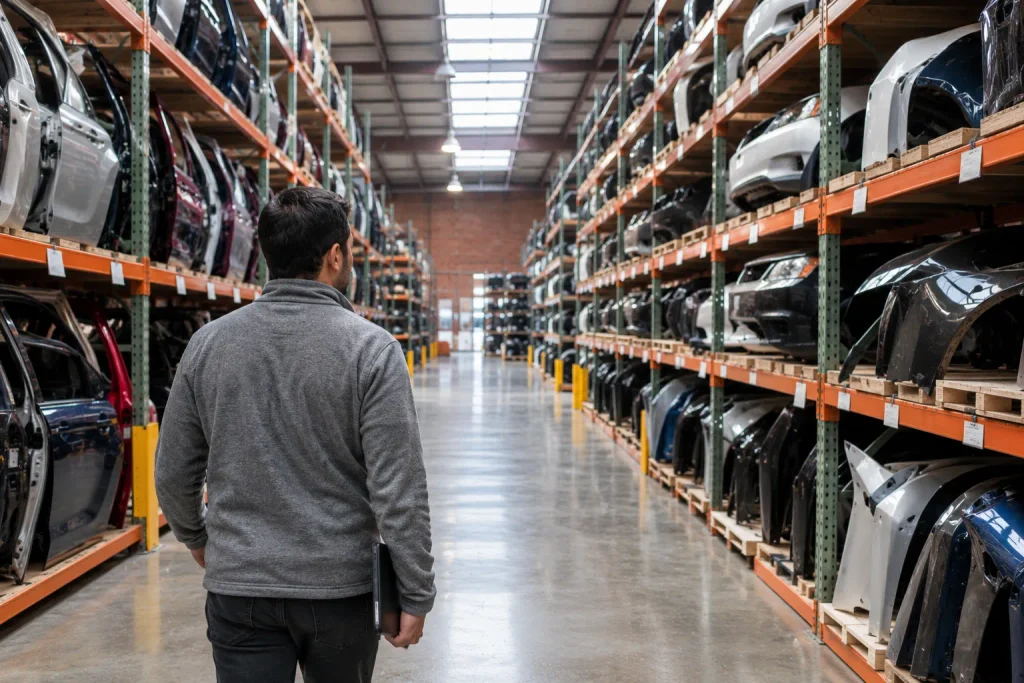
Cars that are totaled in collisions often have undamaged engines, transmissions, electronics, and body panels. Insurers declare them a total loss because the overall repair bill is too high, not because every part failed. Recyclers pull the parts that survived, test them, and sell them. A salvage donor is the normal, expected source of used parts, not a warning sign by itself.
Does a Salvage Donor Affect the Part Itself?
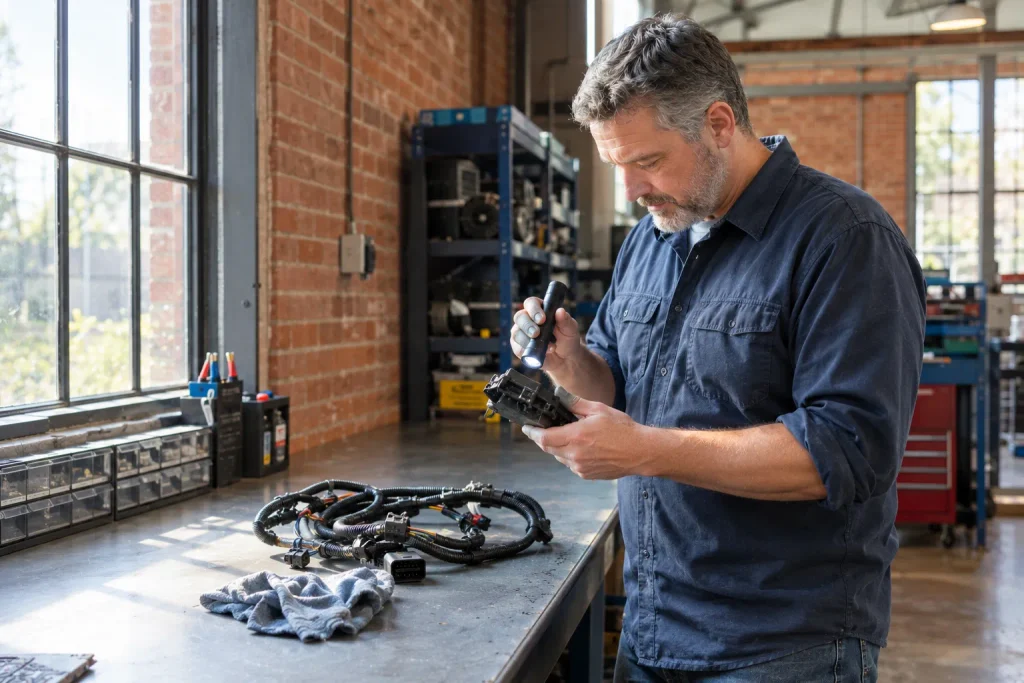
Sometimes, but through the damage, not the title. What matters is where the donor was damaged and what the part went through:
- Distance from the impact: A rear-collision donor often has an excellent engine and front end. A frontal-collision donor is a different story for radiators, suspension, and structural parts.
- Water exposure: Flood damage can hurt electronics, modules, and wiring harnesses even when they look fine.
- Fire or heat: Heat can compromise plastics, seals, and wiring near the affected area.
- Safety systems: Airbag and restraint components deserve extra scrutiny. Ask the seller about the donor’s damage and how the part was handled.
Does Buying a Part From a Salvage Car Affect My Car?
No. A title brand is attached to the donor vehicle’s VIN. Installing a used part doesn’t change your own car’s title, registration, or history. The brand only follows a vehicle, never a component.
What Should You Ask Before Buying?

Since the title doesn’t decide the part’s quality, these questions do:
1. What was the donor vehicle’s mileage, and where was it damaged?
2. Was the part tested, and can I see the results?
3. Are there signs of water, fire, or impact damage on or near the part?
4. What written warranty comes with it? Our parts warranty shows what clear terms look like.
5. Does the seller pass the basics of our 10-point used engine checklist and our online buying safety tips?
Frequently Asked Questions
Are used parts from salvage-title cars safe to buy?
They can be, because most used parts come from vehicles that were totaled. What matters is the condition and testing of the specific part, the damage on the donor vehicle, and whether the seller backs it with a written warranty.
Will a part from a salvage car give my car a salvage title?
No. The title brand belongs to the donor vehicle’s VIN. Installing a used part doesn’t change your own car’s title.
Is a clean-title donor always the better choice?
Not necessarily. A clean title describes the car’s history, not the wear on one component. Mileage, test results, and warranty tell you more about the part.
Which parts need the most care when the donor was salvaged?
Safety-related and damage-sensitive parts: airbag and restraint components, structural and suspension parts, and electronics or modules from flood-damaged vehicles. Ask the seller about the donor’s damage before buying.
The Bottom Line
For used parts, the title question is mostly a red herring. A salvage donor is where most good parts come from, and a clean title is no promise on its own. Ask about the donor’s damage, demand test results, and make sure a written warranty stands behind the part.
Want to see how that looks in practice? Search our verified inventory and ask us anything about a part’s donor vehicle before you buy.