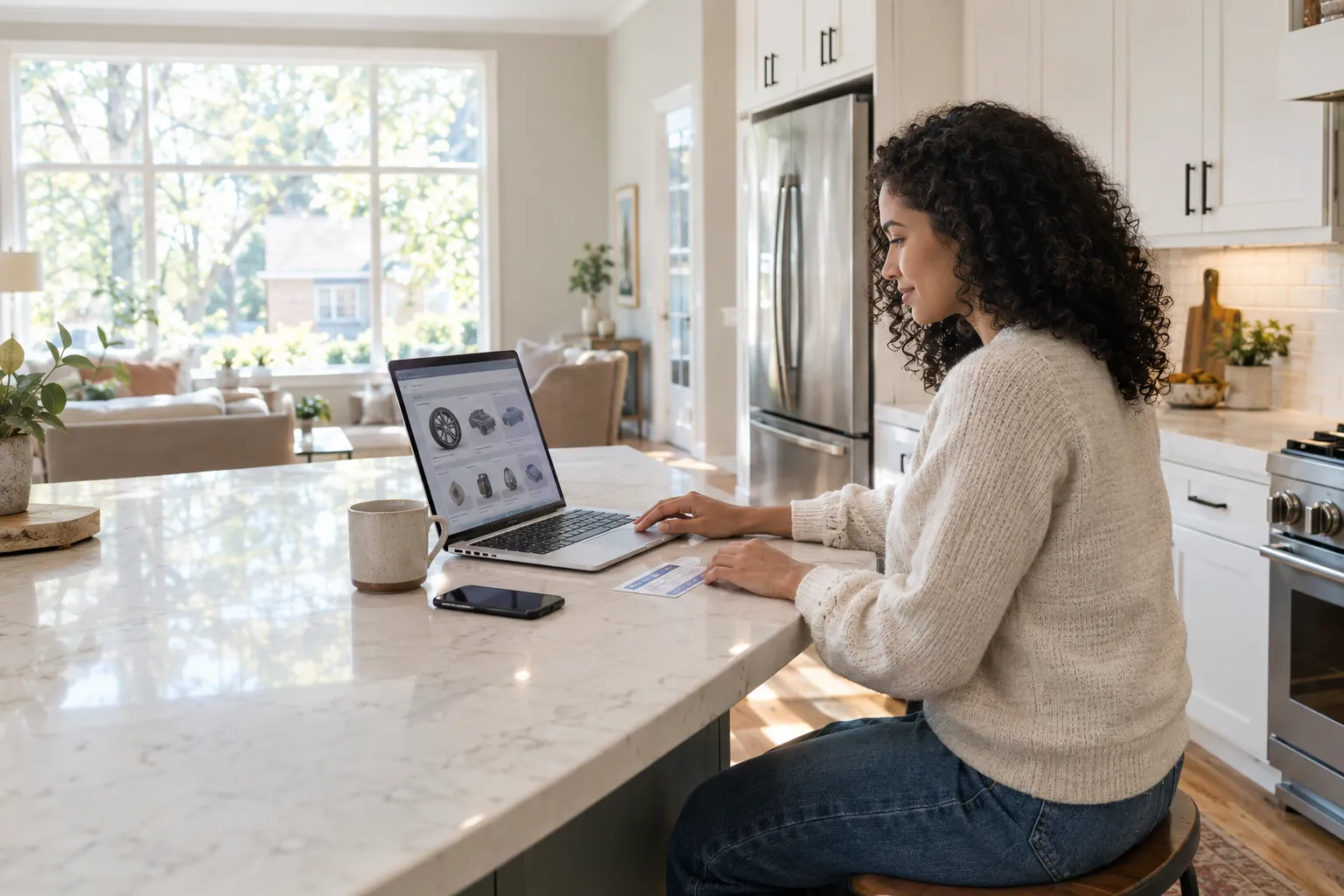
Quick Answer: To buy used auto parts online safely, confirm fitment with your VIN and the exact part number before paying, pay with a credit card rather than a wire transfer or gift card, and buy only from sellers with a verifiable address, real phone number, and a clear return policy. If a deal seems too good to be true or a seller pressures you to pay a certain way, treat that as a warning sign.
Buying a used part online for the first time can feel like a leap of faith. You’re trusting a photo, a listing, and a stranger’s word that the part will actually fit your car and actually show up. Most of the industry’s advice on this topic is thin, which is strange given how many salvage yards and parts sellers now ship nationwide. Here’s what actually protects you, from confirming fitment to avoiding the handful of scam patterns that keep showing up across the country.
How Do You Verify a Used Part Will Actually Fit Your Car?
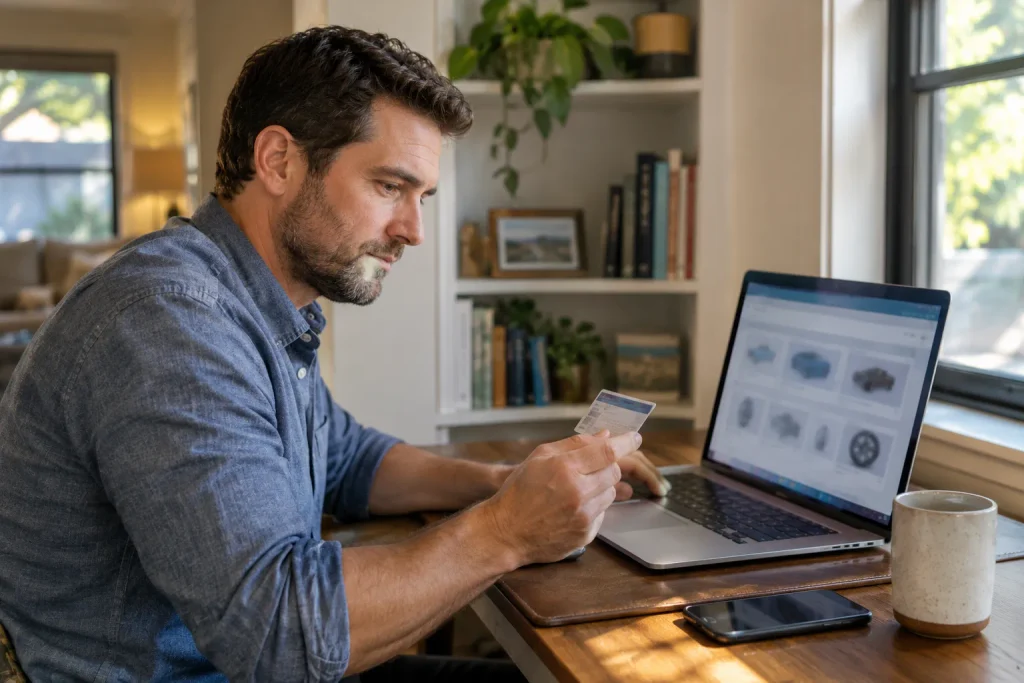
Start with your vehicle’s VIN, not just the year, make, and model. The same model year can carry different trims, engine codes, or part variations that only the VIN or an exact interchange number can confirm. A legitimate seller should be able to match a part to your VIN or ask for it directly rather than taking your word on compatibility.
Ask to see real photos of the actual part, not a manufacturer stock image. Sellers who can’t or won’t provide a photo of the specific unit you’d be receiving are asking you to buy blind. If a seller’s site lets you search by VIN before you ever enter payment details, that’s a strong sign fitment is actually being checked, not assumed.
What Are the Biggest Red Flags of an Online Auto Parts Scam?

A handful of warning signs show up again and again in reported auto parts scams:
- A price dramatically below every other listing. If one seller is a fraction of everyone else’s price for the same part, that gap usually isn’t a deal, it’s a warning.
- Pressure to pay through wire transfer, gift cards, or peer-to-peer apps. Legitimate businesses accept standard payment methods and don’t push you toward ones that are hard to reverse.
- No verifiable business address or working phone number. A real salvage yard or parts seller can be found, called, and checked.
- Stock photos instead of photos of the actual part. This is especially common on social media marketplace listings.
- Reviews that all appear within a short window, with no older history. A sudden cluster of five-star reviews with no part numbers or specifics is worth a second look.
Which Payment Methods Actually Protect You?

Not all payment methods give you the same recourse if something goes wrong. Here’s how the common options compare:
| Payment Method | Buyer Protection | Can You Dispute a Charge? |
| Credit card | Strong | Yes, through your card issuer |
| PayPal (goods and services) | Moderate | Yes, through PayPal’s resolution process |
| Debit card | Limited | Sometimes, varies by bank |
| Wire transfer | None | No |
| Gift cards | None | No |
| Peer-to-peer apps (Zelle, Cash App) | Minimal to none | Rarely |
Paying by credit card gives you a formal path to dispute a charge if the part never arrives or doesn’t match what was described. Wire transfers, gift cards, and peer-to-peer payment apps are difficult or impossible to reverse once sent, which is exactly why scammers tend to request them.
How Can You Check If a Seller Is Legitimate Before You Buy?
A few minutes of research before you pay can save you from a costly mistake:
1. Search the business name alongside the word “scam” or “complaints” and see what comes up.
2. Check the seller’s profile on the Better Business Bureau’s site, including how recently complaints were filed.
3. Call the phone number listed before buying. A number that goes straight to voicemail or doesn’t match the business name is worth a second thought.
4. Run a reverse image search on the part photo if it looks like a generic stock shot. Images lifted from other listings are a common scam shortcut.
If you ever do send payment to a seller who turns out to be fraudulent, report it at ReportFraud.ftc.gov, the Federal Trade Commission’s official portal for scam and fraud reports.
What Should a Legitimate Return and Warranty Policy Look Like?

A seller confident in their parts will put the warranty terms in writing before you buy, not just promise verbally that “it’ll be fine.” Look for a specific coverage window, a clear process for return shipping if the part doesn’t fit, and a real phone number or email to reach if there’s a problem after installation. If a listing has no mention of returns or warranty at all, ask before you pay rather than assuming one exists.
Frequently Asked Questions
How do I know if a used auto parts seller is legitimate?
Check for a verifiable business address, a working phone number, reviews spread out over time rather than clustered recently, and a clear return or warranty policy listed before you buy.
Is it safe to pay for used auto parts with a gift card or wire transfer?
No. Neither offers any way to reverse the payment if the part never arrives or doesn’t match the listing. Stick to a credit card or a payment platform with a formal dispute process.
What information do I need to verify a part will fit my car?
Your vehicle’s VIN and, ideally, the exact part or interchange number. A legitimate seller should be willing to confirm fitment against your VIN before you pay.
What should I do if I think I’ve been scammed buying auto parts online?
Contact your card issuer to dispute the charge if you paid by credit card, and report the seller at ReportFraud.ftc.gov so other buyers are protected going forward.
The Bottom Line
Buying a used auto part online doesn’t have to feel risky once you know what to check. Confirm fitment against your VIN, pay with a method that protects you, and buy from a seller who’s verifiable and upfront about warranty terms. The parts that are worth buying are the ones a seller is willing to stand behind in writing.
Want to see what a verified listing actually looks like? Search our inventory by VIN and see exactly what fits before you pay a cent.