Quick Answer: Catalytic converter theft is climbing again in 2026 as precious metal prices rise, and Atlanta is one of the metro areas seeing the most reports. A converter can be cut off in under two minutes, but parking smart, adding a shield or VIN etching, and knowing Georgia’s new sales laws can cut your risk and speed up recovery if it happens anyway.
You hear it before you see it. Your car sounds like a jet engine the moment you start it, and the muffler shop tells you the news: your catalytic converter is gone. It’s one of the most common and most expensive theft claims on the road right now, and Atlanta drivers have been squarely in the crosshairs. Here’s why it’s happening again, how to make your car a harder target, and exactly what to do if you’re already staring at a missing converter.
Why Are Catalytic Converters Being Stolen in 2026?
Catalytic converters contain platinum, palladium, and rhodium, precious metals that scrap buyers pay real money for. When those metal prices climb, theft climbs right along with them.
Rhodium has traded above $12,000 an ounce in early 2026, and research on the crime shows that a 10% jump in precious metal prices tends to produce roughly a 20% jump in theft reports. A thief with a battery-powered saw can remove a converter in under a minute, sell it to a scrap buyer for $50 to $500 in cash, and be gone before anyone notices. Trucks and SUVs are common targets because their higher ground clearance makes the converter easy to reach.
How Can You Protect Your Catalytic Converter From Theft?
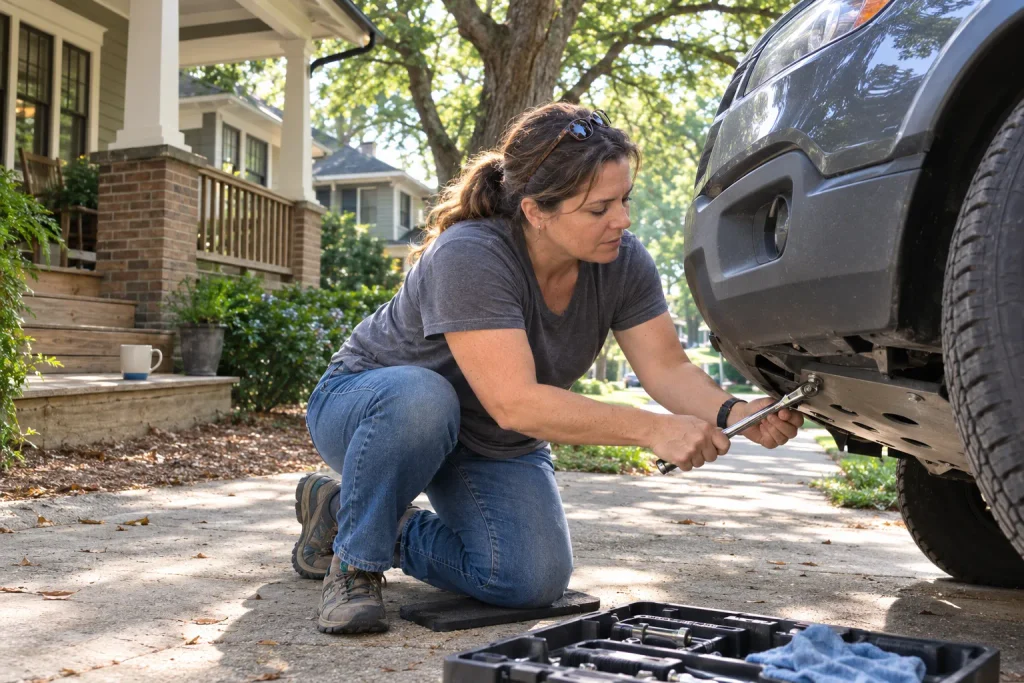
Layer a few low-cost deterrents together instead of relying on just one, since thieves are looking for the fastest, easiest target on the block.
- Park smart: a locked garage is best. If you have to park outside, choose a spot under a streetlight or security camera rather than a dark corner of a lot.
- Etch the VIN: many local police departments and muffler shops offer free VIN etching on your converter. It won’t stop a theft, but it makes the part harder to resell and easier to trace if recovered.
- Install a shield or cage: a welded steel cage or clamp around the converter adds time and noise to the job, which is often enough to make a thief move to an easier car.
- Add a vibration alarm: some aftermarket alarms trigger specifically on the vibration of a saw cutting into the undercarriage.
- Paint it bright: high-temperature spray paint on the converter makes it visually obvious it’s marked, which some thieves avoid for that reason alone.
What Should You Do the Moment You Realize It’s Gone?
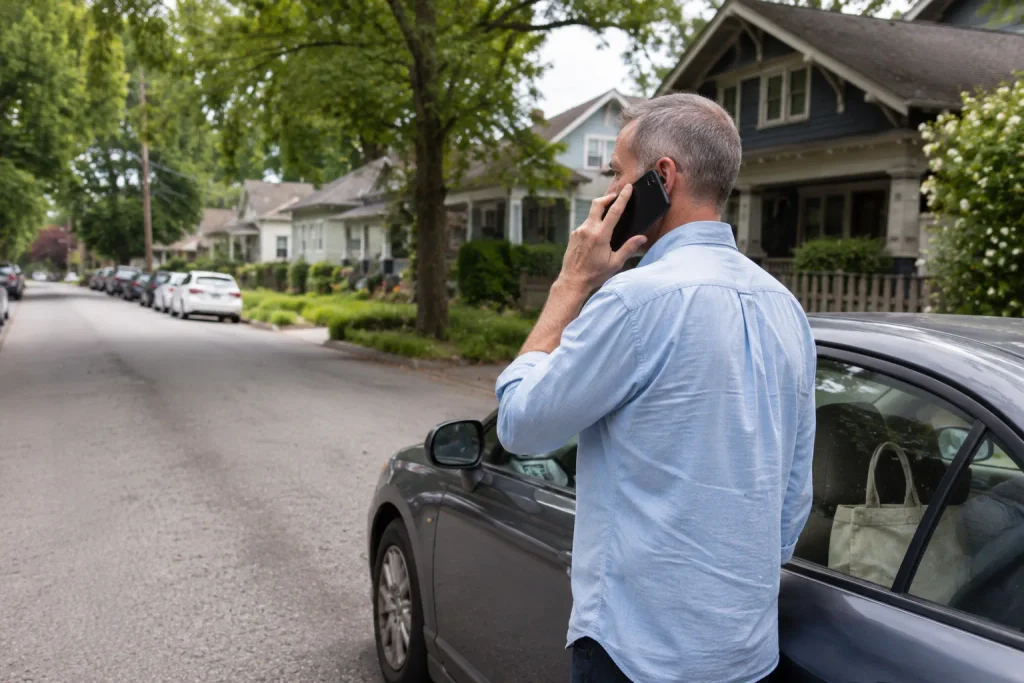
Don’t keep driving on it. Get the car to a shop before you put more than a few miles on it, since the missing converter can affect performance and let a cutting saw’s damage to nearby lines go unnoticed.
1. Confirm it with a mechanic: a quick look underneath the car confirms the converter, not something else, is missing.
2. File a police report: you’ll likely need the report number for your insurance claim, and it helps local law enforcement track theft patterns in your area.
3. Call your insurance company: report the theft within 24 hours if your policy requires prompt notice.
4. Get a full undercar inspection: thieves working with a saw can nick fuel lines, wiring, or the exhaust system beyond the converter itself.
5. Ask about used or aftermarket replacement options: a new converter isn’t always the only path back on the road quickly.
Does Insurance Cover Catalytic Converter Theft?

Comprehensive coverage typically covers a stolen catalytic converter, but liability-only policies do not. Check your policy before you assume you’re covered.
| Coverage Type | Covers Theft? | What You Pay |
| Comprehensive | Yes | Your deductible, typically $250 – $1,000 |
| Collision only | No | Full replacement cost |
| Liability only | No | Full replacement cost |
A stolen converter typically costs $1,000 to $3,000 to replace in parts and labor, so it’s worth confirming your coverage type before you need it, not after.
What Does Georgia Law Say About Buying and Selling Catalytic Converters?
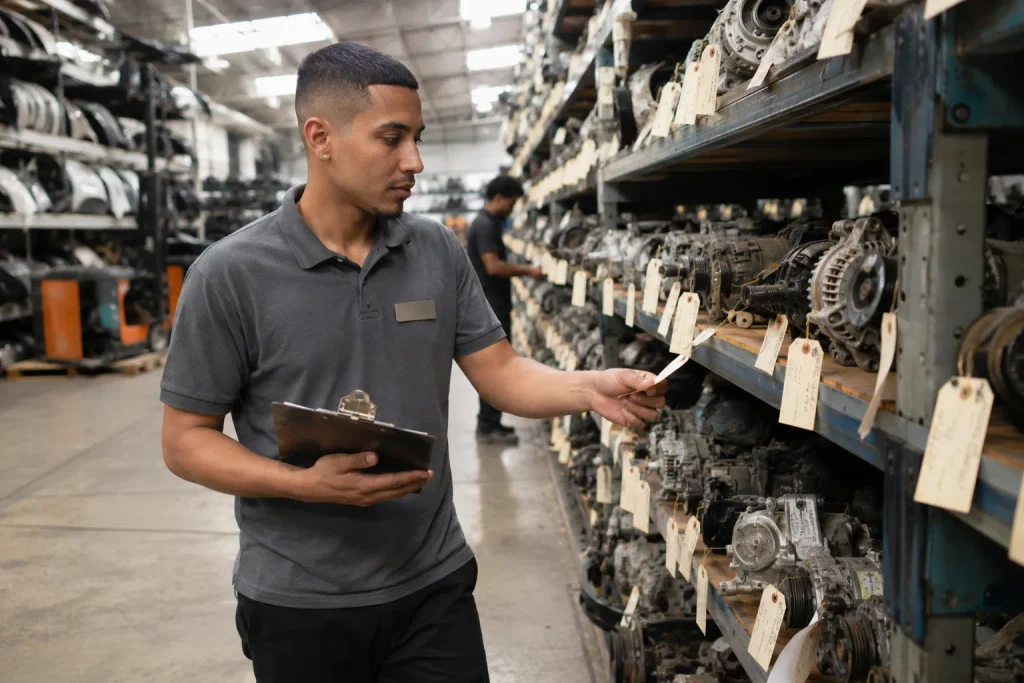
Georgia tightened its rules on detached catalytic converters, and the changes affect anyone selling or buying used parts, not just thieves. As of mid-2025, Georgia law caps cash payments for scrap metal transactions at $100 and bans cash payments entirely for catalytic converters, requiring checks or traceable payment instead.
Sellers of a detached converter generally need to show proof of ownership, such as a title or a receipt tied to the vehicle it came from, and registered recyclers must log the transaction with the state’s tracking database. This is part of why a reputable parts seller matters if you’re replacing a stolen converter with a used, from a licensed yard comes with documentation, while a converter with no paperwork is a legal risk as well as a mechanical unknown.
Frequently Asked Questions
How can I tell if my catalytic converter was stolen?
The clearest sign is a loud, rattling roar from the exhaust the moment you start the car, along with a noticeable increase in exhaust fumes. Looking underneath the vehicle will usually confirm the converter and a section of pipe are missing.
How much does it cost to replace a stolen catalytic converter?
Replacement typically runs $1,000 to $3,000 in parts and labor, depending on the vehicle and whether you use a new, aftermarket, or used converter. Trucks and larger SUVs tend to cost more due to bigger converters and harder-to-reach mounting.
Will my insurance rates go up if I file a claim?
Filing a comprehensive claim can affect your rates depending on your insurer and state, though many drivers find it’s still cheaper than paying the full replacement cost out of pocket. Ask your agent how a theft claim specifically affects your policy before deciding.
Which cars are targeted most often for catalytic converter theft?
Trucks and SUVs with high ground clearance, along with hybrids that have converters containing extra precious metal, are consistently the most targeted vehicles nationally. Ford, Chevrolet, Ram, and Hyundai models appear repeatedly on national theft lists.
Can I legally sell a used catalytic converter in Georgia?
Only to a registered secondary metals recycler, and only with proof of ownership tied to the vehicle it came from. Georgia law now bans cash payment for catalytic converters entirely, requiring a check or traceable payment instead.
The Bottom Line
Catalytic converter theft is trending up again with metal prices, and Atlanta has been one of the harder-hit metro areas. A shield, smarter parking, and VIN etching won’t guarantee protection, but they make your car a slower, riskier target, and knowing the steps to take if it happens anyway gets you back on the road faster.